
Behavioural & Emotional Concerns in Children
A child’s emotional world shows up in their behaviour long before they have the words to explain what they’re feeling. Anxiety, nervous habits, bedwetting, and outbursts are often dismissed as “just a phase,” but when they persist or intensify, they can affect a child’s confidence, relationships, and daily functioning. At Dr. Mansi Child Care Clinic, behavioural and emotional concerns are approached with the understanding that mind and body are closely connected — treating the child’s underlying temperament and sensitivity, not just the visible behaviour.
Anxiety in Children
Childhood anxiety can show up in many forms — excessive worry about school, separation anxiety from parents, fear of specific situations, social withdrawal, or physical complaints like stomach aches and headaches with no clear medical cause. Some children are naturally more sensitive or anxious by temperament, while for others, anxiety emerges around a specific trigger — a house move, exam pressure, a family change, or a difficult social experience. Left unaddressed, anxiety can affect sleep, appetite, school performance, and confidence.

What we do at Dr. Mansi Child Care Clinic
- Take a detailed history of the anxiety pattern — triggers, physical symptoms, and how it affects daily life
- Understand the child’s overall temperament and sensitivity, not just the anxious episodes
- Prescribe constitutional remedies suited to the child’s specific fears, triggers, and emotional expression
- Guide parents on supportive communication and routines that help ease anxious episodes
- Follow up closely to track changes in confidence, sleep, and daily functioning
How Homeopathy Helps
Homeopathy treats anxiety by addressing the child’s underlying emotional sensitivity at a constitutional level, rather than only calming a specific episode. Because remedies are chosen for the individual child’s fears and expression of anxiety, treatment is highly personalised. Many parents notice a calmer, more resilient child over time — better able to handle stress rather than being overwhelmed by it.
Stranger Anxiety
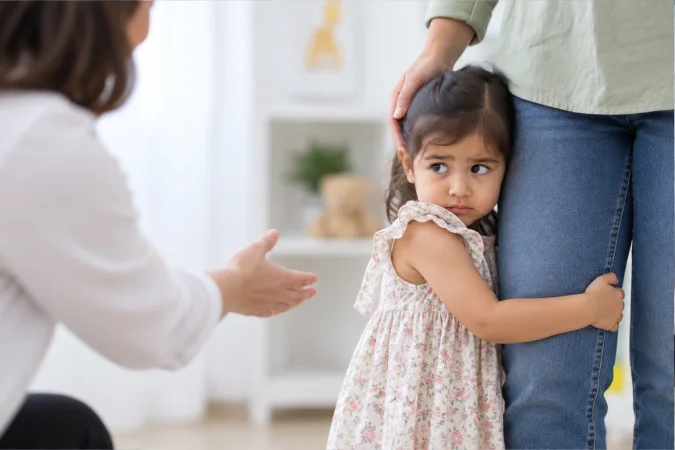
What it is Stranger anxiety is a normal developmental phase in infants and toddlers, typically appearing between six months and two years, where a child becomes distressed, clingy, or tearful around unfamiliar people. In most children it fades naturally with age and exposure. However, some children experience stranger anxiety more intensely or for longer than typical, making family gatherings, school settings, or new environments genuinely difficult, and this can sometimes carry forward into broader social hesitancy if not gently supported.
What we do at Dr. Mansi Child Care Clinic
- Assess whether the anxiety falls within a typical developmental phase or is more intense or prolonged than usual
- Understand the child’s overall temperament and sensitivity to new people and environments
- Prescribe constitutional remedies suited to the child’s specific fear response and general disposition
- Guide parents on gentle, gradual exposure approaches that build confidence without forcing interaction
- Track progress as the child becomes more comfortable in social situations over time
How Homeopathy Helps
Homeopathy supports children with pronounced stranger anxiety by addressing their underlying sensitivity and nervous temperament, helping them settle into new situations with less distress over time. This is paired with practical, unhurried guidance for parents, so the child builds social confidence at their own pace rather than being pushed into overwhelming situations.
Nail Biting
Nail biting is one of the most common nervous habits in children, often starting as a response to stress, boredom, or anxiety, and over time becoming an unconscious habit that persists even after the original trigger fades. It’s frequently linked to underlying tension — around school, social situations, or family stress — though some children develop it simply as a self-soothing behaviour with no obvious cause. Beyond the habit itself, persistent nail biting can lead to sore fingertips and increased risk of infection.

What we do at Dr. Mansi Child Care Clinic
- Explore the possible emotional or situational trigger behind the habit
- Assess the child’s overall temperament and any underlying anxiety or tension
- Prescribe remedies aimed at easing the underlying nervousness driving the habit
- Guide parents on gentle, non-punitive ways to support the child in reducing the habit
- Track progress over time, since habitual behaviours often take sustained support to resolve
How Homeopathy Helps
Rather than only addressing the physical habit, homeopathic treatment works on the underlying nervous tension or anxiety that often drives nail biting. As the child’s emotional state settles, the habit frequently reduces naturally, without the frustration or shaming that can come with habit-breaking techniques focused on the behaviour alone.
Bedwetting
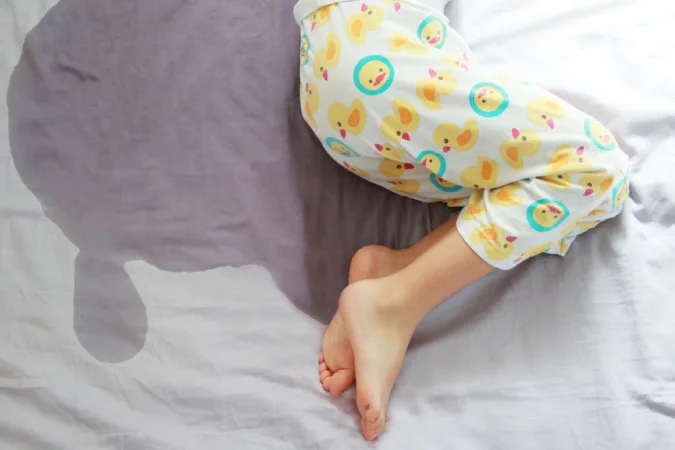
Bedwetting (nocturnal enuresis) beyond the age when most children achieve night-time bladder control can be a source of significant embarrassment and stress for both children and parents. It can stem from a genuinely delayed maturation of bladder control, deep sleep patterns that prevent a child from waking to a full bladder, emotional stress or anxiety, or occasionally an underlying constipation or urinary issue that increases bladder pressure. In many cases, there’s a family history of bedwetting as well.
What we do at Dr. Mansi Child Care Clinic
- Take a detailed history covering sleep depth, fluid habits, stress factors, and family history
- Rule out contributing factors like constipation that can worsen bedwetting
- Prescribe constitutional remedies suited to the child’s sleep pattern and emotional state
- Guide parents on supportive, pressure-free routines around bedtime and fluid timing
- Monitor progress over weeks, since bedwetting often improves gradually rather than overnight
How Homeopathy Helps
Homeopathy treats bedwetting by addressing the underlying factors — whether that’s a deep sleep pattern, emotional stress, or a slower maturing bladder control — rather than relying on alarms or restriction alone. Because the approach is gentle and addresses the whole child, it avoids adding further stress or shame to a situation many children already find embarrassing, while working toward lasting improvement.
Temper Tantrums
Tantrums are a normal part of early childhood, but when they’re unusually frequent, intense, prolonged, or persist well beyond the typical toddler years, they can point to an underlying difficulty with emotional regulation. Triggers vary widely — frustration, tiredness, hunger, overstimulation, a need for control, or difficulty expressing needs verbally. Some children are naturally more intense or strong-willed by temperament, which shapes how tantrums show up and how long they take to settle.

What we do at Dr. Mansi Child Care Clinic
- Understand the child’s temperament and typical tantrum triggers and patterns
- Assess for contributing factors like poor sleep, hunger patterns, or sensory sensitivity
- Prescribe constitutional remedies matched to the child’s emotional intensity and expression
- Guide parents on calm, consistent responses that help a child learn emotional regulation over time
- Track frequency and intensity of tantrums to monitor improvement
How Homeopathy Helps
Homeopathic treatment works on the child’s underlying emotional temperament, helping build greater emotional resilience and self-regulation over time rather than simply managing each outburst as it happens. Paired with consistent, supportive parenting approaches, many families notice tantrums becoming less frequent, less intense, and easier to settle.
Autism Spectrum Concerns
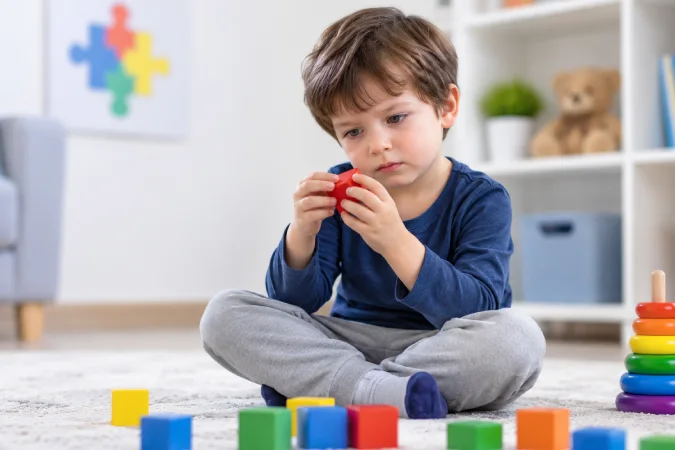
Autism spectrum disorder is a developmental condition affecting communication, social interaction, and behaviour, with wide variation in how it presents from child to child. Signs parents may notice include delayed speech, limited eye contact, repetitive behaviours, difficulty with social interaction, sensory sensitivities, and a strong preference for routine. Autism is a lifelong neurodevelopmental condition, and homeopathy is not a cure for it — but many children benefit from supportive care alongside standard developmental therapies like speech and occupational therapy.
What we do at Dr. Mansi Child Care Clinic
- Take a detailed history of the child’s development, behaviour patterns, sensitivities, and daily challenges
- Work alongside a child’s existing developmental therapies, not as a replacement for them
- Prescribe constitutional remedies aimed at supporting overall vitality, digestion, sleep, and emotional regulation
- Address commonly co-occurring concerns such as digestive issues, sleep disturbance, or heightened sensory sensitivity
- Recommend or reinforce referral to developmental paediatricians, speech therapists, or occupational therapists as appropriate
- Support parents with realistic guidance and consistent follow-up
How Homeopathy Helps
Homeopathic treatment doesn’t target autism itself but can support a child’s overall wellbeing — easing digestive troubles, improving sleep quality, and helping with emotional regulation — which in turn can help the child engage more comfortably with their therapies and daily routines. It’s used as a complementary, supportive approach alongside standard developmental care, with realistic goals set in partnership with parents.
ADHD (Attention-Deficit/Hyperactivity Disorder)
ADHD affects a child’s ability to sustain attention, manage impulses, and regulate activity levels, showing up as difficulty focusing, restlessness, impulsive behaviour, or trouble following instructions and completing tasks. It’s a recognised neurodevelopmental condition that can affect school performance, friendships, and family life when unaddressed. Presentation varies widely — some children are predominantly inattentive, others predominantly hyperactive-impulsive, and many show a mix of both.

What we do at Dr. Mansi Child Care Clinic
- Take a thorough history of attention, activity levels, impulsivity, and how these affect school and home life
- Understand the child’s broader temperament, sleep, and emotional patterns alongside core ADHD symptoms
- Prescribe constitutional remedies aimed at supporting focus, calmness, and emotional regulation
- Work alongside any existing behavioural therapy, counselling, or educational support the child is receiving
- Guide parents on routines and structure at home that support attention and self-regulation
- Track changes in focus, behaviour, and daily functioning through regular follow-up
How Homeopathy Helps
Homeopathy approaches ADHD by supporting the child’s underlying nervous system balance, aiming to gradually improve focus, reduce impulsivity, and ease restlessness. It is generally used as a complementary approach alongside behavioural strategies and any other support a child is receiving, with treatment tailored to each child’s specific pattern of symptoms rather than a standard protocol.